
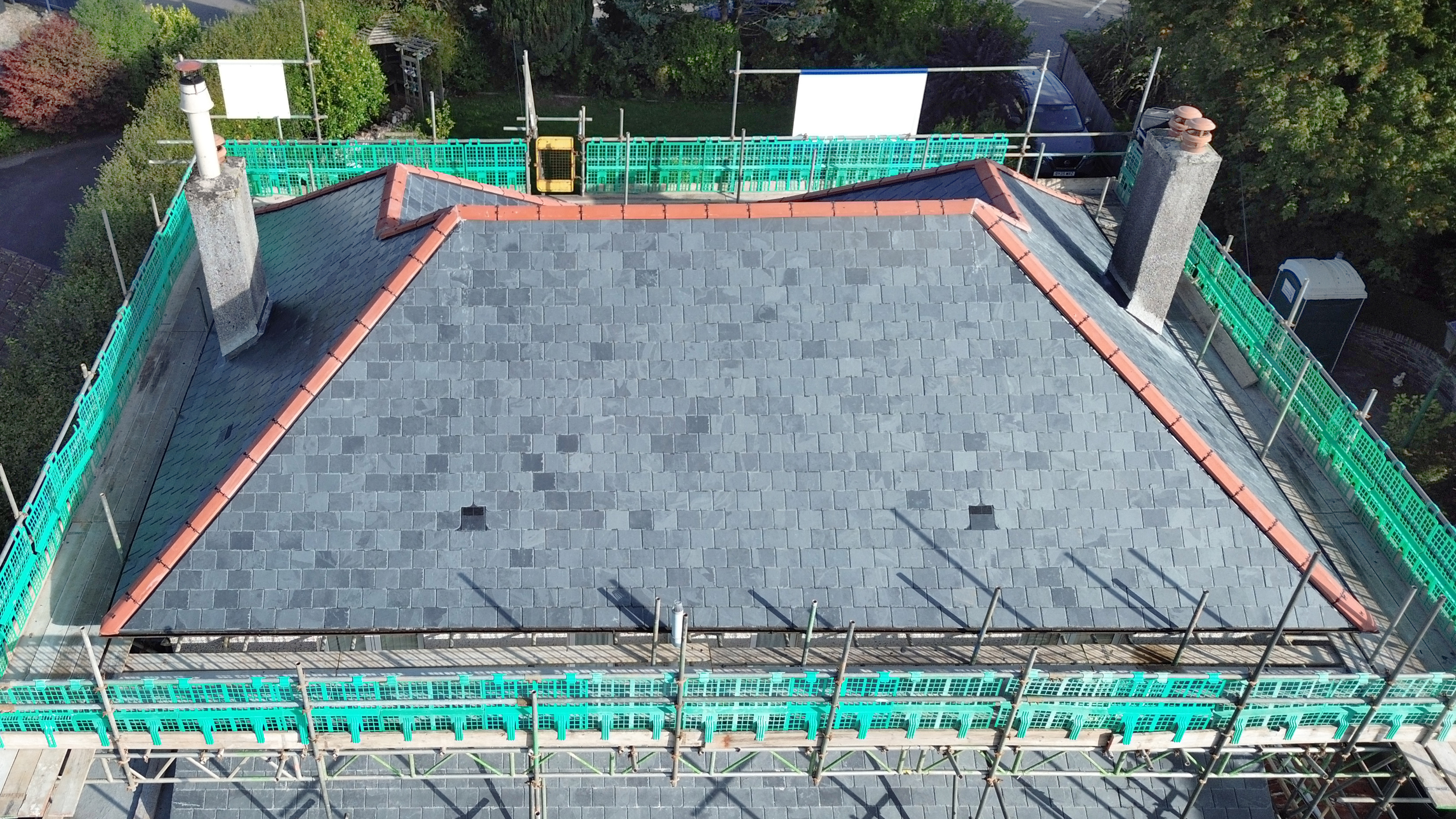
Natural slate is one of the longest-lasting roofing materials available. It's been used on homes across Devon and Cornwall for generations, but how long should a slate roof last, and how can you tell when it needs attention?
The answer depends on the slate, the installation and the condition of the materials holding it in place. A slate roof can last well over a century, but age alone won't tell you whether it needs repair or replacement.
How long does a natural slate roof last?
A well-specified and properly installed natural slate roof can often last 100 years or more. Some remain in service for 150 years and beyond, and durable slates sourced in the South West have been known to last considerably longer.
Historic England notes that slate can last longer than many other roofing materials. The Society for the Protection of Ancient Buildings' regional guidance also highlights the exceptional durability of slates from Devon and Cornwall. These examples show what natural slate can achieve, though they don’t guarantee the same lifespan for every roof.
There isn't one fixed life expectancy for all slate. Different quarries produce slate with different mineral compositions and physical properties. A suitable, high-quality slate may remain sound for generations, while a lower-quality product can deteriorate much earlier.
It's also helpful to distinguish natural slate from man-made or fibre-cement slate. These materials can look similar from the ground, but they're made differently and have different expected service lives. So, be sure to use the figures for natural slate only for a natural slate roof.
What affects the lifespan of a slate roof?
Several factors influence how long a slate roof lasts. The most important are the slate's quality, the installation, and the condition of the supporting roof components.
1. The type and quality of slate
Natural slate is quarried rock, but not all slate has the same durability. Its mineral composition, water absorption and structure affect how it withstands rain, frost and changing temperatures.
Welsh and Cornish slate have a long history of use on UK roofs. Slate from other sources, including Spain, can also be suitable if you choose the right grade. Country of origin alone isn't a reliable guide to quality.
Some slates contain pyrite or carbonate minerals. Depending on their composition, these can cause rust staining, cracking, flaking or layers separating from the surface, a process known as delamination. When choosing slate, ask about its source, suitability and product testing rather than relying on appearance or price alone.
2. The quality of the installation
Even good slate won't perform as it should if it's installed incorrectly. The roof needs the right slate size, headlap and fixing arrangement for its pitch and exposure, with suitable detailing around ridges, hips, valleys, chimneys and wall junctions.
Poor workmanship can let in wind-driven rain or put stress on the slates. Incorrectly driven nails can damage them or fail to hold them securely. Good installation covers the whole roofing system, not just laying straight courses.
3. The fixings and supporting timbers
On older roofs, the fixings often deteriorate before the slate itself. Traditional iron nails can corrode and lose their grip, allowing slates to slip or fall. This is known as nail sickness. The slate may still be sound, but it is no longer securely fixed.
Timber battens can also weaken through moisture, fungal decay or insect attack. If they fail, whole sections of slates may move. An inspection should therefore assess the fixings and supporting structure as well as the external covering.
4. Exposure and maintenance
Exposed sites across Devon and Cornwall can experience strong winds and driving rain. Storm damage, falling branches, blocked gutters, vegetation and unresolved leaks can all contribute to problems. Small defects are easier to deal with before water reaches the roof timbers or ceilings.
Which parts of a slate roof may need attention first?
A slate roof has several components, and they don't all have the same service life. The slate covering may remain sound while other parts need repair or renewal.
Roof component | What can go wrong |
|---|---|
Natural slates | Cracking, impact damage, flaking or delamination |
Nails and fixings | Corrosion, loss of grip and slipped slates |
Timber battens | Rot, insect damage or weakening around old fixings |
Underlay | Age-related deterioration, tearing or poor ventilation details |
Leadwork and flashings | Splits, holes or failed joints around chimneys, valleys and walls |
Ridges and hips | Loose or deteriorated ridge fittings and mortar |
This is why a leak doesn't automatically mean the slate roof has reached the end of its life. Water may be getting in around a chimney, valley or flashing, or through a small area of slipped slates. A proper inspection can help identify the source before you commit to extensive work.
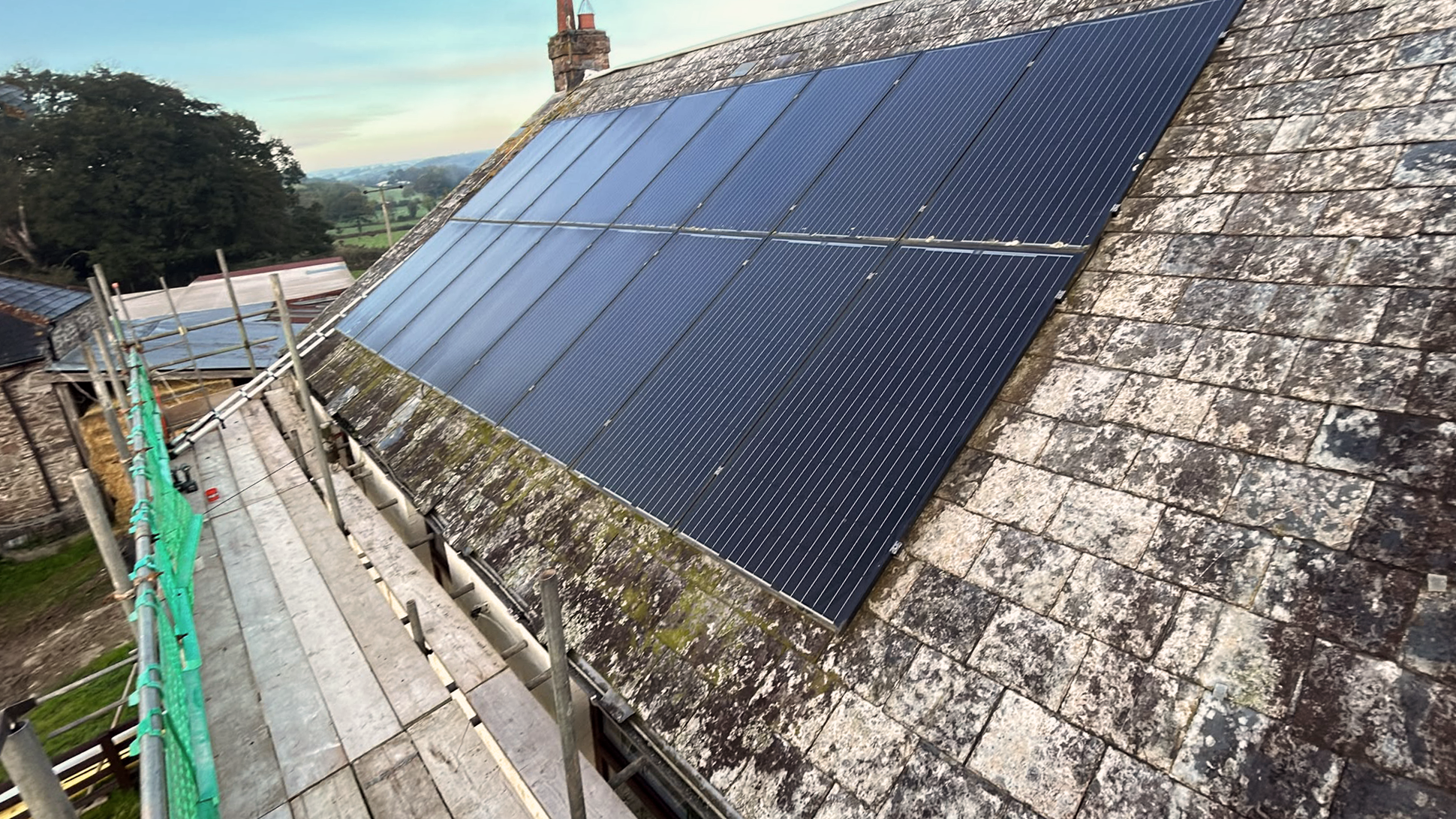
Signs that your slate roof may need attention
Don't wait for a leak inside the house before arranging an inspection. From ground level, look for:
- Slates that are missing, cracked or visibly out of line.
- Several slates slipping in the same area, or repeated problems after repairs.
- Flaking, splitting or significant changes to the slate surface.
- Heavy moss or vegetation growth, particularly where debris is collecting.
- Damaged ridge tiles, valleys or lead flashing around chimneys and roof junctions.
Inside the loft, look for damp patches, water staining on timbers, wet insulation or daylight showing through the roof covering. A leak may travel along a rafter before becoming visible on a ceiling, so the damp patch isn't always directly below the point where water enters.
Weathering or a colour change doesn't necessarily mean the roof needs replacing. The number of affected slates, the pattern of failure and the underlying materials all matter. Don't climb onto the roof to investigate; slate can be fragile and slippery.
How to make a slate roof last longer
Regular checks and prompt repairs help protect the slates and the structure beneath them.
- Arrange regular inspections. Have the roof checked at least annually, ideally before winter, and after significant storms or periods of severe weather. Some conservation guidance recommends checking roofs twice a year.
- Keep gutters and valleys clear. Leaves and debris can obstruct drainage and allow water to collect where it shouldn't.
- Deal with slipped or broken slates promptly. Replacing an isolated slate or carrying out a local repair can prevent water ingress and avoid more extensive damage.
- Check the roof's junctions. Chimney flashings, lead valleys, ridges, hips and abutments are all areas where leaks can develop.
- Avoid aggressive cleaning and coatings. Pressure washing, careless scraping and spray-on roof treatments can damage slates or make future inspection and repairs more difficult. Get professional advice before removing moss or vegetation.
Repairs to older roofs should use compatible slates of suitable size, thickness and appearance. You can often reuse sound original slates, helping retain the character of traditional and listed properties.
Should you repair or replace an old slate roof?
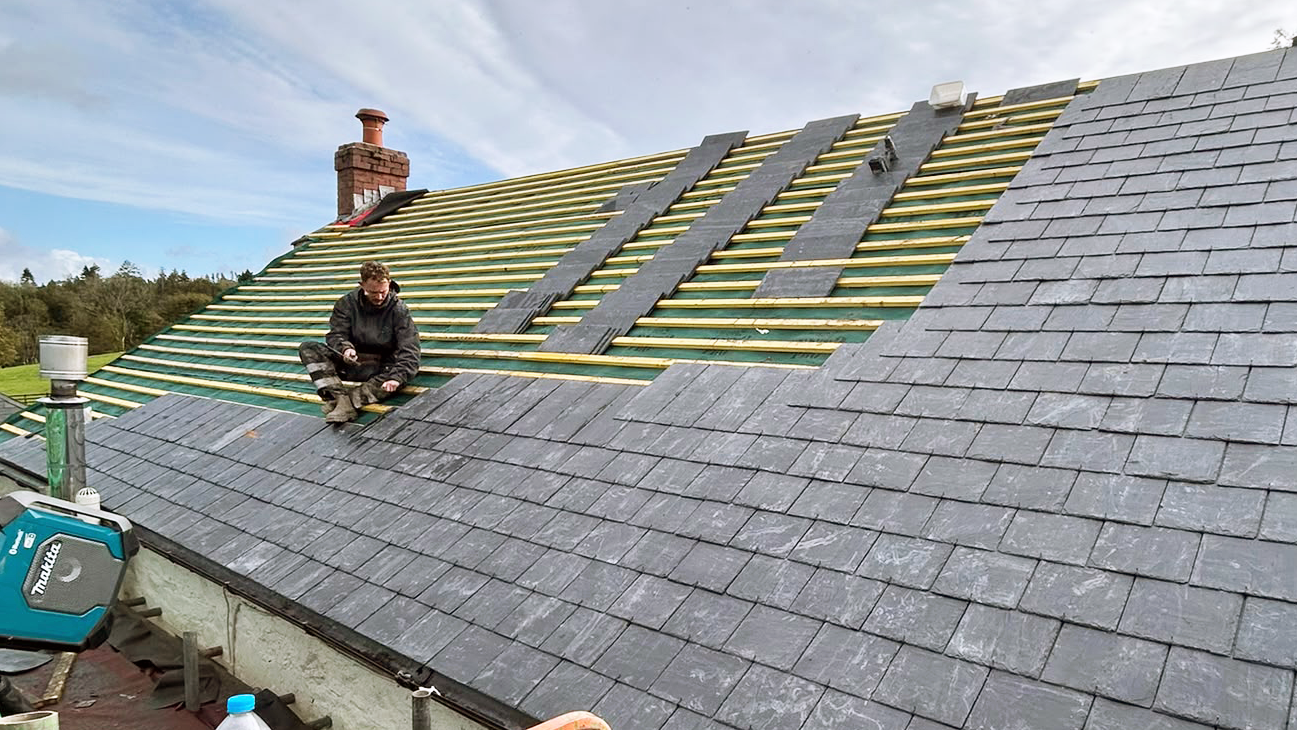
The roof's age alone doesn't justify a full replacement. If the slate is still in good condition and the problem is limited to a few slipped slates, failed nails or defective flashing, a targeted repair may be all that's needed.
A full re-slate may be the better option if slate deterioration is widespread, fixings and battens are failing across several roof slopes, leaks keep recurring, or the underlay and other supporting materials have reached the end of their useful life. As a general guide, the Institute of Historic Building Conservation notes that a roof with around 20 to 25% of its slates damaged or missing may need a full strip and re-slate. A site inspection and an assessment of the roof as a whole will help determine the right approach.
If a roof needs stripping, it may be possible to salvage and reuse a high proportion of the existing slates. An experienced roofer can assess their condition once they're removed and identify which are suitable for reuse.
If you're considering a replacement, choosing the right slate and installation method is important. Our guide to traditional slate roofs in Devon and Cornwall explains the different options, local roofing styles and details to consider. You can also read our advice on slate roof replacement in Devon and Cornwall.
Slate roof inspections, repairs and replacement in Devon and Cornwall
A natural slate roof can last for generations, but it still needs care. Regular inspections, appropriate repairs, and quality materials help protect your property from water damage.
Tamar Roofing & Building Services carries out slate roof inspections, repairs, re-slating and new installations across Devon and Cornwall. We work with natural Delabole, Welsh and Spanish slate and can advise on the right approach for your property.
If you're concerned about slipped slates, recurring leaks or the condition of an ageing roof, contact Tamar Roofing & Building Services on 01752 922 752 to arrange a roof inspection and quotation.