
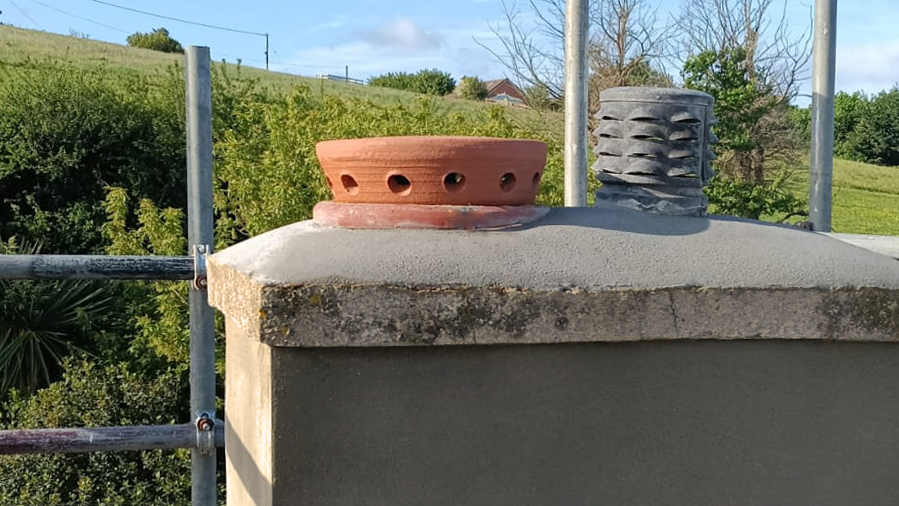
Chimneys are an important part of many homes across Devon and Cornwall, from older terraced houses in Plymouth to traditional cottages and detached properties in rural areas. Yet, because the exposed part of a chimney sits above roof level, it is easy to overlook until a problem develops.
A key area that deserves attention is chimney flaunching. This mortar layer at the top of the chimney stack helps secure the chimney pots and directs rainwater away from the vulnerable masonry beneath. When it cracks, crumbles, or separates, water can enter the chimney and cause damage beyond the roof.
Understanding how chimney flaunching works, recognising the warning signs and arranging repairs when needed can help homeowners protect their property and avoid more extensive chimney repairs.
In this guide, Tamar Roofing & Building Services explains what chimney flaunching is, why it matters, how to identify damage and when to arrange a professional chimney inspection.
What Is Chimney Flaunching?
Chimney flaunching is the sloping mortar bed formed around the base of chimney pots at the top of a chimney stack. It is sometimes also called chimney haunching or benching.
The flaunching is shaped to create a weather-shedding surface, helping rainwater run away from the chimney pots rather than collecting around their bases. It also helps hold the pots securely in place, reducing the risk of movement in strong winds.
Although it is only one part of the chimney, flaunching has two important functions:
- Keeping water out: The sloping surface directs rainwater away from the top of the stack, helping to protect the brickwork and mortar beneath.
- Securing chimney pots: The mortar provides a stable bed around the pots, keeping them firmly in place.
Over time, rain, wind, frost, and temperature changes can deteriorate the mortar. Once cracks develop, water can penetrate the flaunching, weaken the surrounding masonry, and cause further damage.
A well-maintained chimney stack is less vulnerable to these problems, so include flaunching in routine roof and chimney inspections.
Why Is Chimney Flaunching Important?
Chimney stacks face the elements year-round. Unlike parts of a building protected by walls or eaves, a chimney's top receives direct rainfall and can be particularly exposed to strong winds.
This is especially relevant to properties across Plymouth, Devon and Cornwall, where wet, windy weather can put considerable stress on roofs and exposed masonry.
When chimney flaunching is in good condition, it helps water drain away efficiently. When it fails, rainwater can collect in cracks or penetrate the mortar and brickwork.
During colder weather, water absorbed into damaged masonry can freeze and expand, putting additional pressure on the surrounding material. Repeated wetting and freezing can worsen existing cracks and cause further deterioration.
Water entering a chimney stack may also affect the roof space and the rooms below. Depending on the chimney's construction and condition, this can cause damp patches, staining, damaged plaster, and deterioration of nearby timber.
There is also a safety concern. If the flaunching deteriorates sufficiently, chimney pots can become loose or unstable. In severe cases, loose masonry or pots may fall from the roof, potentially damaging roof coverings or putting people below at risk.
Promptly repairing damaged chimney flaunching helps prevent a relatively localised defect from becoming a more extensive repair.
Signs Your Chimney Flaunching Needs Repair
Because flaunching sits at the top of the chimney, damage can develop without being obvious from the ground. However, several warning signs are worth taking seriously.
1. Cracked or Crumbling Mortar
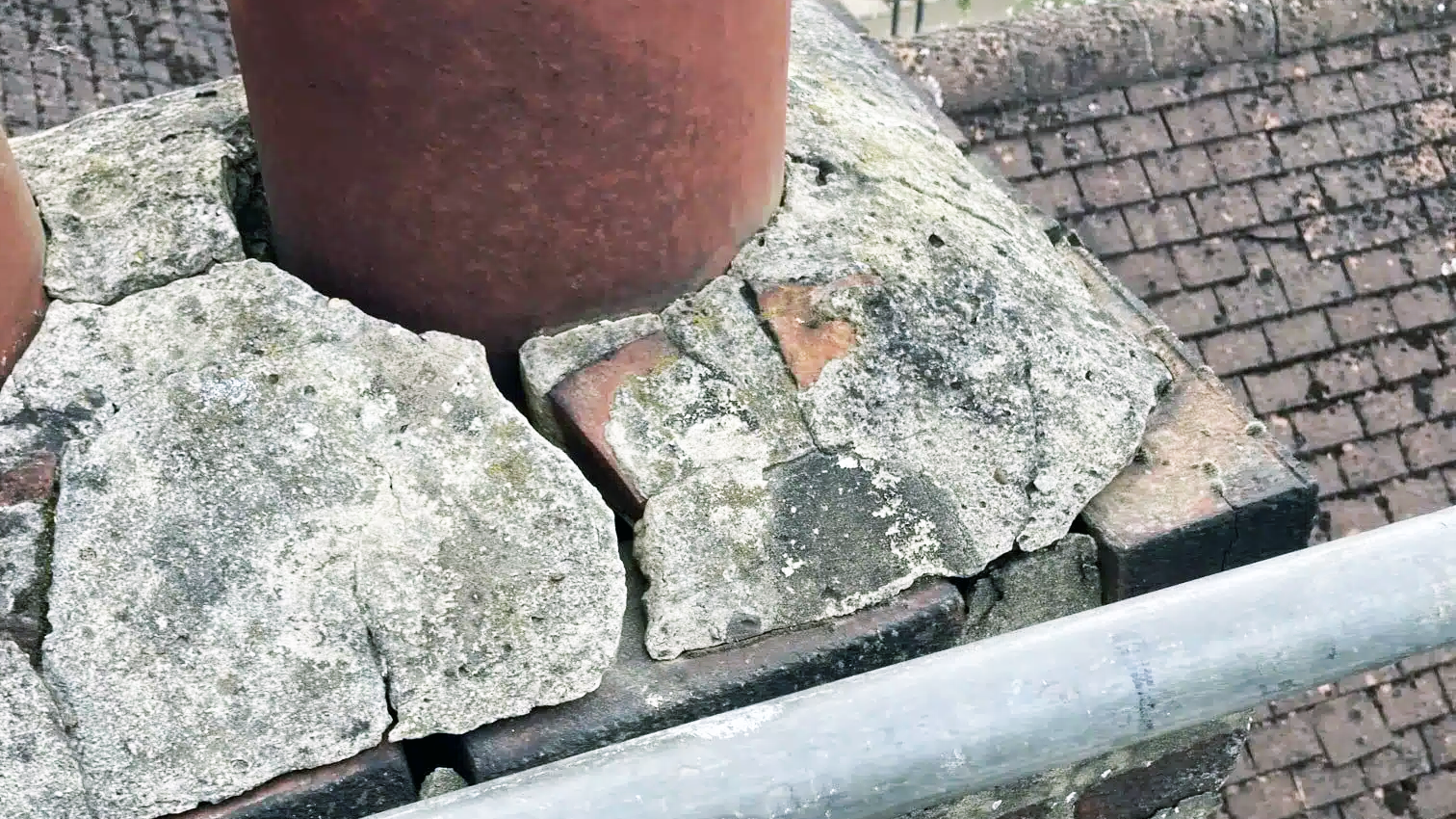
Visible cracks across the flaunching, crumbling edges or missing sections of mortar can indicate that the surface is deteriorating. Small cracks can grow into larger openings that let more water in.
The extent of the damage determines whether a local repair is appropriate or whether you need to remove and replace the existing flaunching.
2. Loose or Leaning Chimney Pots
Chimney pots should sit securely on top of the stack. If a pot appears to be leaning, moving, or sitting unevenly, the supporting mortar may have failed.
This can present a safety risk, particularly in exposed locations during strong winds. A professional roofer should assess loose pots rather than approach or move them without suitable equipment.
3. Damp Patches Around the Chimney Breast
Water penetrating the chimney can sometimes show up indoors as damp patches, discolouration or peeling paint near the chimney breast. A musty smell or recurring dampness after rainfall may also indicate a moisture problem.
However, damp around a chimney does not automatically mean the flaunching is at fault. Defective lead flashing, deteriorated pointing, porous masonry or problems inside the flue can produce similar symptoms.
An inspection should identify the moisture source before specifying repairs.
4. Mortar or Masonry Debris on the Roof
Small pieces of mortar or brick around the roof, in the gutters or on the ground beside the property may indicate deterioration of the chimney stack.
Debris can come from the flaunching, the mortar joints between bricks or damaged sections of masonry. Investigate any loose material near a chimney, especially if the stack itself is becoming unstable.
5. Deteriorating Brickwork Around the Top of the Stack
Cracked bricks, eroded joints, loose masonry or sections of the stack that appear to be moving may indicate a wider chimney problem.
Flaunching repairs alone will not resolve defective brickwork or structural movement. A suitable repair may also require chimney repointing, brick replacement or, in more serious cases, rebuilding part or all of the stack.
These signs are useful indicators, but they cannot confirm the cause without a closer inspection.
Chimney Flaunching, Repointing and Lead Flashing: What's the Difference?
Chimney flaunching is often confused with other chimney repairs. Although these components all help protect the building against water ingress, they serve different purposes.
| Chimney component | What it does | Signs of damage |
|---|---|---|
| Flaunching | Secures chimney pots and sheds rainwater from the stack top. | Cracked mortar, crumbling edges or loose pots. |
| Chimney pointing | Fills the mortar joints between bricks or stones, helping protect the masonry. | Missing, recessed or crumbling mortar and deteriorating joints. |
| Lead flashing | Seals the junction between the chimney and the roof covering. | Lifted lead, split joints, gaps or water entering around the chimney base. |
| Chimney pots | Provide outlets for flues and help direct gases away from the building when the flue is in use. | Cracks, movement, broken sections or missing pots. |
| Chimney masonry | Forms the stack structure above the roof. | Cracked or loose bricks, damaged stonework, leaning or movement. |
Consider these components together when assessing a chimney. For example, a damaged flaunching may be accompanied by deteriorating pointing, while a leak around the chimney could originate from defective lead flashing rather than the top of the stack.
Correctly identifying the fault helps ensure the repair addresses the cause, not just the visible symptoms.
What Causes Chimney Flaunching to Deteriorate?
No single cause damages chimney flaunching. Several factors can contribute to its deterioration over time.
Weather exposure: Rainwater, strong winds, frost, and temperature fluctuations repeatedly stress the mortar at a chimney's top.
Ageing mortar: Mortar gradually weathers and can lose strength, particularly if the original installation was poorly prepared or finished.
Poor installation: Flaunching that has not been shaped to shed water effectively may allow water to collect around chimney pots. Poorly secured pots can also contribute to movement and cracking.
Water penetration and frost: When water enters existing cracks, freezing conditions can worsen the damage. Repeated wetting and freezing cycles can break apart mortar.
Movement in the chimney stack: Structural movement or deterioration in the underlying masonry may cause cracks to appear in the flaunching.
Identifying the underlying cause is important. Simply covering visible cracks without checking the condition of the existing mortar, pots and masonry may not provide a lasting solution.
How Is Chimney Flaunching Repaired or Replaced?
The right approach depends on the condition of the flaunching and the surrounding chimney.
Where the damage is minor and localised, a repair may be possible. However, if the mortar is extensively cracked, loose, or crumbling, removing the failed material and installing new flaunching may be the better option.
A professional chimney flaunching repair generally involves the following steps.
1. Inspecting the Chimney Stack
The roofer assesses the condition of the flaunching, chimney pots, mortar joints and surrounding masonry. Also check the roof junction and lead flashing for signs of water ingress.
The inspection helps determine whether the problem is confined to the flaunching or requires further chimney repairs.
2. Removing Damaged Mortar
Carefully remove loose, cracked, or deteriorated flaunching where necessary. The aim is to remove failed material without unnecessarily damaging the chimney pots or underlying masonry.
If the pots are loose or damaged, address their condition before completing the new flaunching.
3. Preparing the Surface and Securing the Pots
Prepare the supporting surface so the replacement mortar can form a suitable, stable bed. Repair any defective bedding or damaged components as part of the process.
Proper preparation matters because new mortar applied over loose or unsound material may fail prematurely.
4. Applying New Flaunching
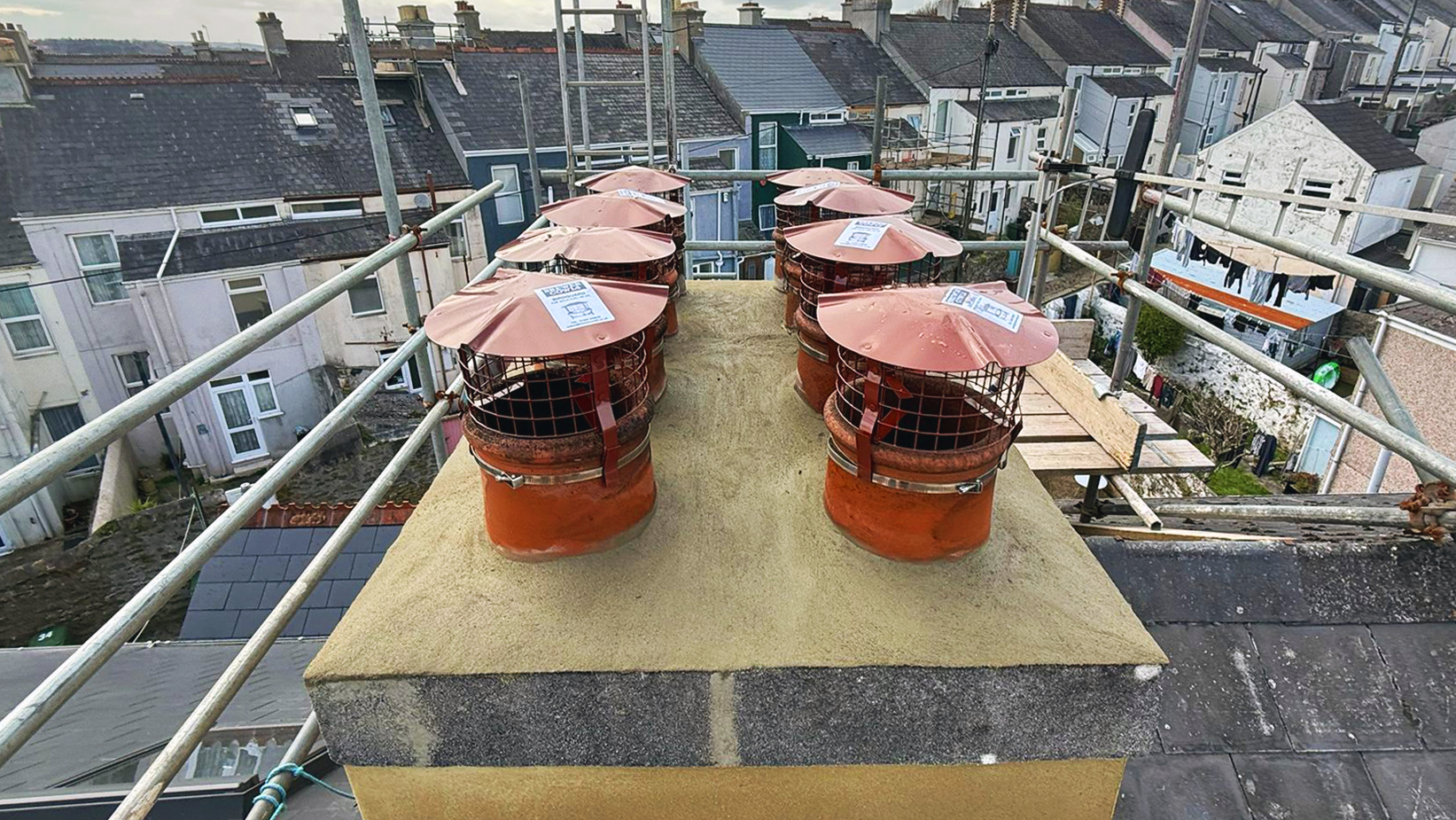
Apply and shape suitable mortar to create a durable, sloping surface around the chimney pots. The finished profile should direct rainwater away from the pots and the top of the stack.
The mortar specification must suit the chimney's construction, considering its age, materials, and weather exposure.
5. Checking the Finished Repair
Once the work is complete, the roofer checks that the flaunching has the correct shape and that the pots are secure. Record and address any additional defects identified during the inspection as needed.
Keep in mind that the repair also needs suitable weather conditions for the mortar to set and cure properly.
Choosing the Right Mortar for Chimney Repairs
The mortar used for chimney flaunching and repointing deserves particular attention, especially on older properties.
Traditional brick and stone chimneys may have been built using lime mortar. Lime mortar can accommodate movement and lets moisture evaporate through the joints. Using an unsuitable, overly hard mortar on older masonry can restrict this moisture movement and damage the surrounding brick or stone.
Modern construction may call for a different mortar specification. The appropriate choice depends on the materials, condition and design of the chimney.
Flaunching and repointing should not automatically be treated as the same job with the same mortar requirements. The material should be specified for the particular application and existing construction.
If your property is older or listed, we can offer advice and have experience with traditional building materials. Historic England provides further guidance on maintaining and repairing roofs on older homes .
Can You Repair Chimney Flaunching Yourself?
The Health and Safety Executive identifies roof work as hazardous and requiring proper planning and precautions. As such, it's best to leave chimney flaunching repairs to an experienced roofing professional.
The work takes place at height, often on a sloping roof, and access to the chimney can be difficult. Loose chimney pots and deteriorating masonry create additional hazards. Inadequate access equipment or working methods can put the person carrying out the repair and people below at risk.
Practically, a lasting repair requires more than applying fresh mortar over a crack. You must identify the underlying cause, remove failed material where necessary, and form the new flaunching correctly.
A professional inspection can also spot related issues you might otherwise miss, including defective pointing, damaged lead flashing, or unstable chimney pots.
Homeowners should avoid climbing onto the roof to inspect or repair the chimney themselves.
How Much Does Chimney Flaunching Repair Cost?
The cost of chimney flaunching repair varies from property to property. The condition of the existing mortar is only one factor affecting the price.
Other factors include:
- Chimney height and roof access: A tall chimney or difficult roof layout may require more extensive access arrangements.
- Extent of the damage: A localised repair may involve less work than removing and replacing the complete flaunching.
- Condition of the chimney pots: Damaged or unstable pots may need to be removed, repaired or replaced.
- Additional chimney repairs: Deteriorating pointing, damaged brickwork or defective lead flashing may require separate work.
- Scaffolding and safety requirements: The cost of suitable access equipment can significantly affect the total price.
The most reliable way to establish the cost is to arrange a professional chimney inspection and obtain a quotation based on the stack's actual condition.
A quotation should clearly explain the proposed repair, any additional work required and the access arrangements. This makes it easier to compare options and understand what the price includes.
Chimney Maintenance: How to Reduce the Risk of Future Problems
Chimney maintenance is often overlooked because the top of the stack is difficult to see. However, including it in periodic roof inspections can help identify deterioration before it develops into a more serious issue.
Arrange an inspection if you notice signs of damaged mortar, loose pots, falling debris, or unexplained dampness around the chimney breast.
It is also sensible to have the chimney checked following severe weather if you suspect damage. Do not attempt to inspect the stack from the roof yourself, and keep people away from the area directly below if loose masonry may fall.
Even if a chimney is no longer in use, the stack remains exposed to the weather and may still require maintenance. Older chimneys can also have architectural or heritage value, so appropriate repairs are especially important.
For general roof maintenance, consider the chimney's condition alongside the roof covering, valleys, gutters, and lead flashing.
Chimney Flaunching and Chimney Stack Repairs in Plymouth, Devon and Cornwall
Whether you have noticed cracks around your chimney pots, mortar falling onto the roof or signs of damp inside your home, it is worth finding out what is causing the problem before the damage spreads.
Tamar Roofing & Building Services provides chimney repair services for homeowners across Plymouth, Devon, and Cornwall, including chimney repointing, lead flashing repairs , chimney pot replacement, and chimney stack rebuilding.
Our team can assess your chimney's condition and explain which repairs your property needs. We aim to identify the problem, recommend suitable work, and help protect your roof from further water damage.
If you suspect your chimney flaunching is damaged, arrange a professional inspection rather than waiting for the problem to worsen.
Contact Tamar Roofing & Building Services on 01752 922752 to discuss your chimney repairs or request a quotation.
You can also find out more about our chimney repair services and the work we carry out across Plymouth, Devon, and Cornwall.
Frequently Asked Questions About Chimney Flaunching
What is chimney flaunching made from?
Chimney flaunching is typically formed from mortar shaped around the base of the chimney pots. The correct mortar specification depends on the chimney's construction, age and exposure to the weather.
Can damaged chimney flaunching cause a roof leak?
Yes. Cracked or deteriorating flaunching can let water into the chimney stack and may affect the roof space or rooms below. However, leaks around a chimney can also originate from damaged pointing, defective lead flashing or other defects.
Does damaged flaunching always need replacing?
Not necessarily. The appropriate repair depends on the extent and cause of the damage. Minor, localised defects may be repairable, while extensive cracking, crumbling mortar, or unstable chimney pots may require replacing the old flaunching.
Is chimney flaunching the same as repointing?
No. Flaunching is the sloping mortar bed around the chimney pots at the top of the stack. Repointing involves removing deteriorated mortar from the joints between bricks or stones and replacing it with suitable new mortar.
Should a disused chimney still be maintained?
Yes. A chimney that is no longer used remains exposed to the weather, and its flaunching, pots, masonry and flashing can still deteriorate. Any work to cap, alter or remove parts of a disused chimney should be appropriate to the building and its existing flue arrangements.
When should I arrange chimney flaunching repairs?
Arrange an inspection if you notice cracked or missing mortar, loose chimney pots, masonry debris around the roof or damp near the chimney breast. If the chimney appears unstable or material is at risk of falling, keep clear of the area below and seek professional assistance promptly.