
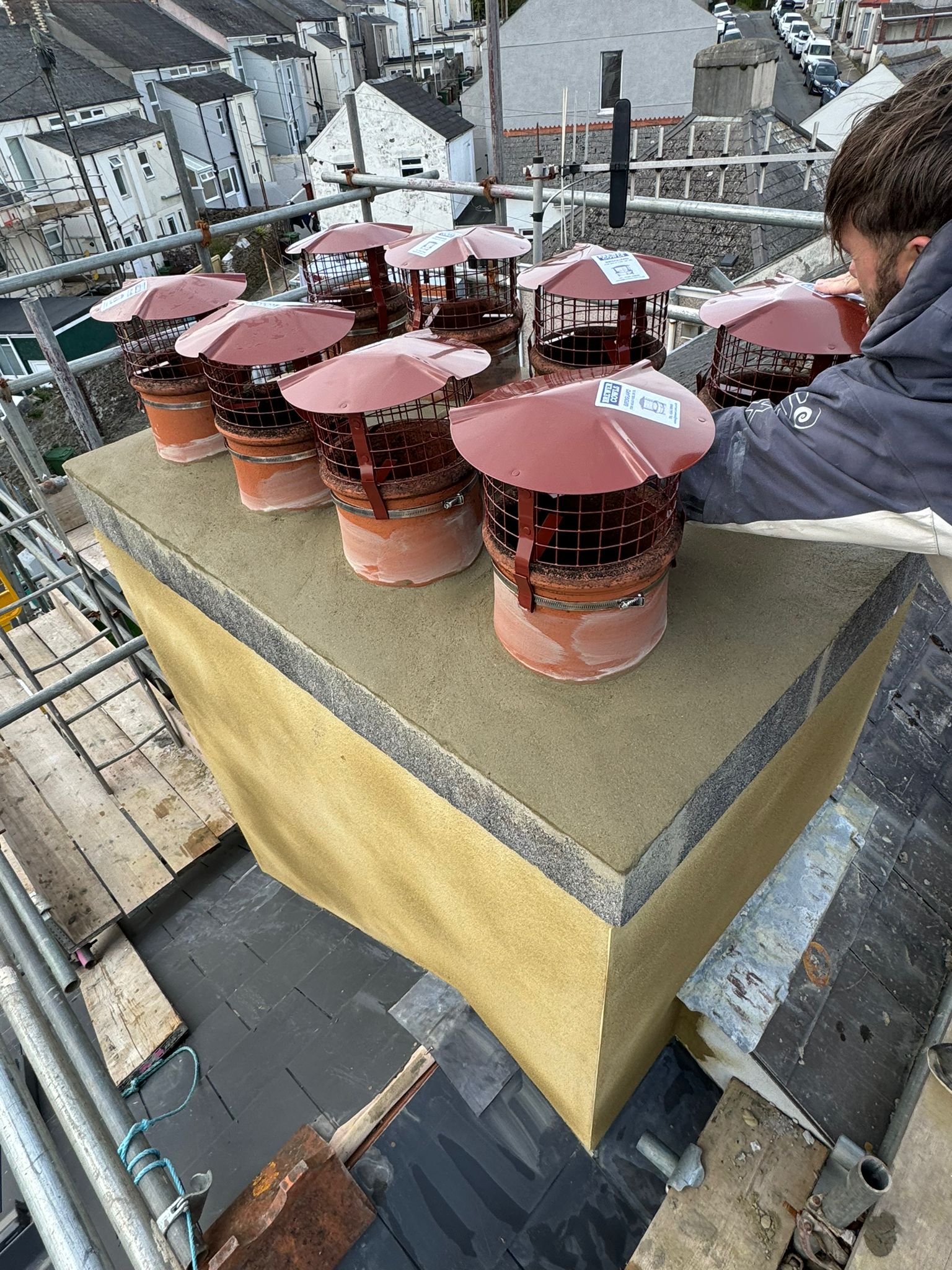
A chimney may seem like a simple part of your roof, but it has to withstand some of the harshest conditions a property can experience. Wind, driving rain, frost, temperature changes and years of exposure can all take their toll on chimney stacks, flashing, pots, mortar and surrounding roof coverings.
For homeowners in Devon and Cornwall, chimney maintenance can be particularly important. Many properties have older brick, stone or cob chimneys, while exposed locations can leave chimney stacks vulnerable to weather-related deterioration. A small defect can quickly become a leaking chimney, damp internal walls or, in more serious cases, an unstable chimney stack.
At Tamar Roofing & Building Services, we provide professional chimney repairs across Devon and Cornwall, including chimney repointing, leadwork repairs, chimney pot replacement and chimney stack rebuilding. The right repair depends on the chimney's condition and construction, which is why a proper inspection should always come before work begins.
What causes chimney problems?
Chimneys are exposed to repeated wetting and drying, freezing temperatures, high winds, and constant temperature changes. Over many years, these conditions can cause mortar joints to deteriorate, bricks or stone to spall and lead flashing to loosen.
Common causes of chimney damage include:
- Age and weathering: Mortar gradually erodes and masonry can deteriorate after years of exposure.
- Failed or defective pointing: Open or crumbling mortar joints allow water to penetrate the chimney stack.
- Damaged lead flashing: Flashing forms the weatherproof junction between the chimney and roof. If it becomes loose, cracked or poorly installed, rainwater can enter the roof structure. Roof junctions around chimneys are particularly vulnerable areas.
- Cracked or damaged chimney pots: Pots can become loose or fractured, particularly in exposed locations.
- Defective flaunching: The mortar bed supporting chimney pots can crack or deteriorate, allowing water into the top of the stack.
- Unsuitable render or mortar: Inappropriate repair materials can trap moisture or accelerate deterioration, particularly on older properties.
- Structural movement: Cracks, settlement or erosion can lead to a leaning or unstable chimney stack.
- Disused chimneys: Even a chimney that is no longer used still forms part of the roof and needs to be kept weatherproof.
How do you know if your chimney needs repairing?
Chimney problems aren't always obvious from inside the house. Some defects can only be identified from the roof or by inspecting the chimney closely.
However, there are several warning signs to watch for.
1. Crumbling or missing mortar
Look at the joints between bricks or stone. Deep erosion, missing pointing, cracking or crumbling mortar can allow rainwater into the chimney structure. We recommend checking masonry for cracks, deep erosion, missing pointing and crumbling as part of routine maintenance.
2. Damp patches or water stains
Water entering around a chimney may appear as staining on ceilings or walls, particularly around the chimney breast. Moisture can also be visible in the loft around the rafters and chimney stack.
Don't assume the roof covering itself is responsible for a chimney leak. Faulty flashing, porous masonry, failed pointing and defects higher up the stack can all allow water to enter.
3. Loose or cracked chimney pots
A damaged chimney pot can allow rainwater into the stack and may become a safety issue if it becomes unstable. Also check the mortar or flaunching supporting the pot.
4. Damaged lead flashing
Lead flashing is designed to keep the junction between the roof and chimney watertight. Look for flashing that has lifted, become detached, cracked or moved away from the masonry.
5. A leaning chimney
A visibly leaning chimney stack should never be ignored. Erosion, deteriorated masonry, or other defects can cause structural movement.
6. Bricks, stone or mortar appearing on the ground
Finding pieces of chimney masonry in the garden or around the base of the property can indicate that the stack is deteriorating and needs professional inspection.
What does chimney repair involve?
There isn't a single type of chimney repair. The appropriate solution depends on what has failed and how extensive the damage is.
Chimney repointing
Repointing involves removing failed mortar from the joints and replacing it with suitable new mortar. The joints need to be properly prepared before fresh pointing is installed.
The choice of mortar matters, particularly on older properties. Historic England recommends that repair materials are compatible with the existing building fabric and notes that inappropriate materials can accelerate deterioration. Lime-based mortars are often appropriate for traditionally constructed buildings where they are compatible with the existing masonry.
For period stone, brick and cob properties across Devon and Cornwall, simply using the strongest available mortar isn't necessarily the best approach. The repair needs to work with the existing building.
Lead flashing and leadwork repairs
Flashing around a chimney is one of the most important parts of the weatherproofing system. Repairs may involve securing, replacing or renewing lead soakers, step flashing, aprons or other sections of leadwork.
A proper inspection should establish whether the flashing itself has failed or whether water is actually entering through defective masonry above it.
Chimney pot and flaunching repairs
Cracked or loose chimney pots can often be repaired or replaced. The supporting flaunching should also be inspected because deteriorated mortar around the base of the pot can allow water into the chimney.
Chimney stack rebuilding
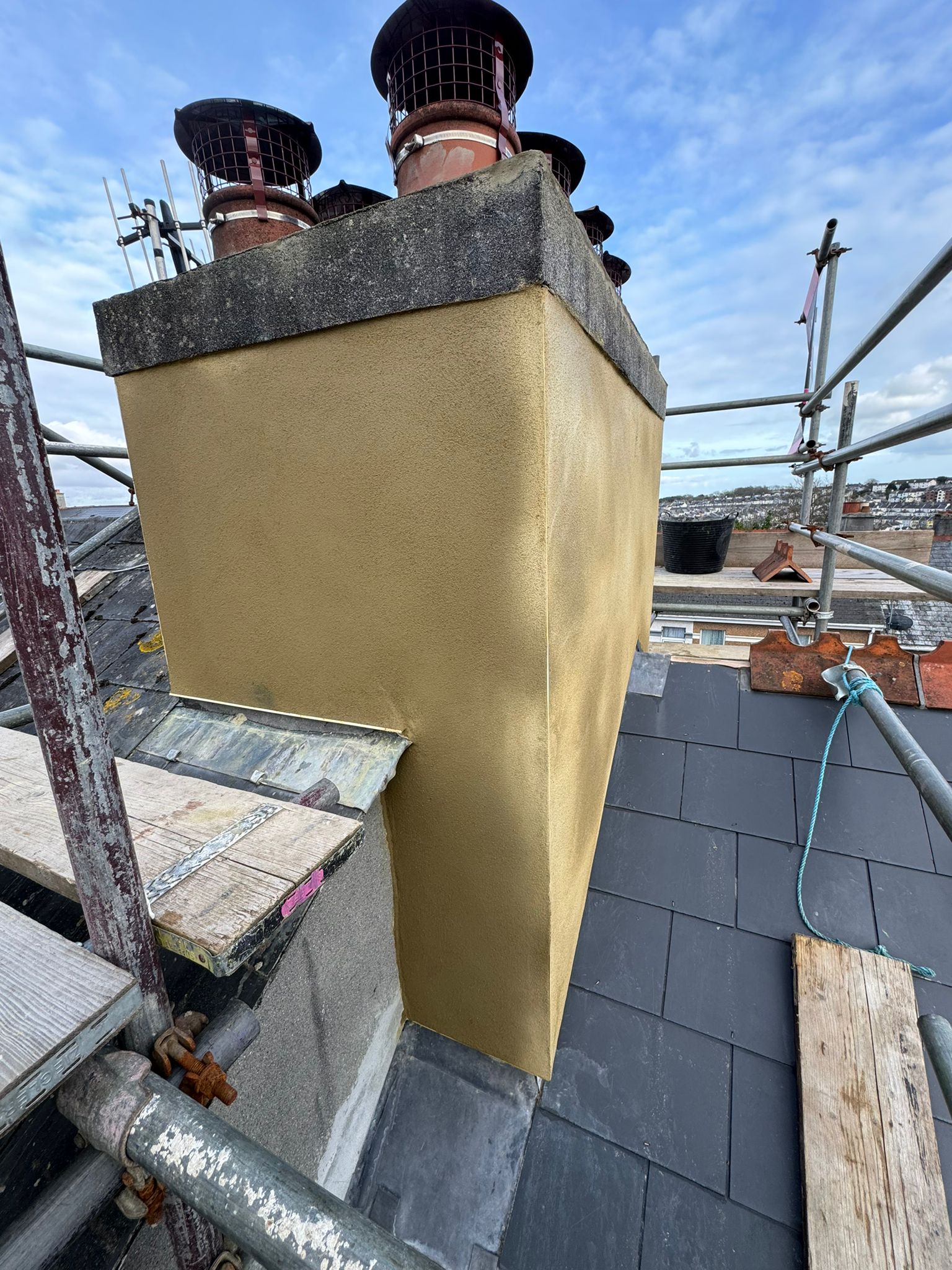
Where a chimney has extensive structural damage, partial or complete rebuilding may be required. This can involve carefully dismantling damaged masonry before rebuilding the stack to the appropriate height and specification.
For period properties, retaining suitable original materials can help preserve the building's character.
More extensive waterproofing
Some chimney leaks are caused by water penetrating porous masonry rather than a simple defect in the flashing.
For example, a chimney repair could involve removing the stack below the roof line and installing lead water trays, weep vents, and additional flashing to manage water entering the masonry. This shows why finding the actual source of a leak matters, rather than simply sealing the most visible defect.
Chimney repairs on older Devon and Cornwall properties
Older properties need particular care when chimney repairs are specified. Traditional brick, stone and cob buildings can behave differently from modern construction, and the wrong repair materials can sometimes make an existing problem worse.
Repairs to historic and listed buildings should be based on an understanding of the building, its materials and the causes of deterioration. Repairs should use materials and techniques that are compatible with the existing fabric.
This is particularly relevant when dealing with lime mortar, stonework, cob and historic brickwork. The objective isn't simply to make the chimney look repaired. It should be repaired in a way that allows the building to continue to perform properly.
For listed buildings and properties in conservation areas, additional planning or consent requirements can also apply, depending on the work proposed.
Chimney problem or roof problem?
Because a chimney passes through the roof, chimney leaks and roof leaks can easily be confused.
| Symptom | Possible cause |
|---|---|
| Damp around chimney breast | Leaking masonry, flashing or stack |
| Water staining in loft | Failed flashing, porous masonry or defects at the stack |
| Crumbling mortar | Weathering, moisture penetration or unsuitable previous repairs |
| Loose chimney pot | Failed flaunching or deteriorated mortar |
| Damp after heavy rain | Flashing, porous masonry or defective roof junction |
| Cracks in stack | Movement, settlement or masonry deterioration |
This is why a proper inspection is worthwhile before arranging repairs. Treating the wrong part of the roof may only hide the problem temporarily.
Don't wait for a small chimney problem to become a major repair
Chimney defects won't improve on their own. Failed pointing can allow more water into the masonry. Damaged flashing can lead to damp within the roof structure, while loose masonry or chimney pots can become a safety concern.
At Tamar Roofing & Building Services, we offer chimney inspections, chimney repointing, leadwork and flashing repairs, chimney pot repairs and replacement, and chimney stack rebuilding across Plymouth, Devon, and Cornwall. Our chimney repair service also covers brick and stone chimney stacks, with lime mortar used on period properties where appropriate.
If you've noticed crumbling chimney pointing, damaged lead flashing, a cracked chimney pot, damp around the chimney breast or movement in the stack, it's worth having the chimney inspected before the damage becomes more extensive.
A professional chimney repair isn't simply about making the stack look better. Done properly, it helps keep the chimney stable, protects the roof from water ingress and can prevent a relatively small defect from developing into a much larger and more expensive problem.
Need a chimney repair in Plymouth, Devon, or Cornwall? Tamar Roofing & Building Services can inspect your chimney and explain what needs to be done, whether that's straightforward repointing, leadwork repairs or more extensive chimney rebuilding. Call 01752 922 752 to discuss your options.